
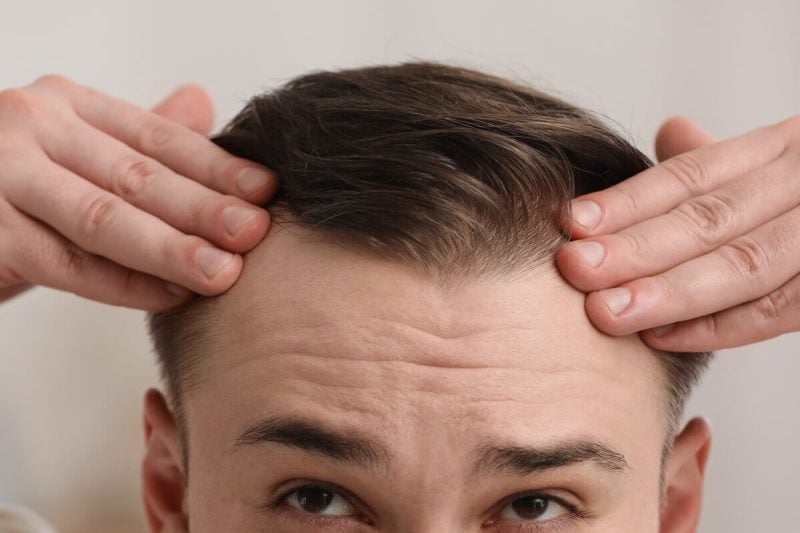
Noticing a receding widow’s peak can be an unsettling experience, often bringing a mix of surprise and self-consciousness as subtle changes in the hairline become more apparent. For many, it’s not just a physical shift but an emotional one, tied to concerns about aging, appearance, and identity.
Nearly one third of males have a widow’s peak, a naturally occurring V-shaped hairline that is largely influenced by genetics. As we age, natural hairline maturation and temple recession can make the widow’s peak appear more pronounced or create a deeper M-shaped hairline.
You may be wondering “can I get a hair transplant to fix a widow’s peak?”. The short answer is yes—hair transplants can reshape, soften, or restore your hairline. Here’s what to know about how the procedure works and the types of widow’s peaks it can address.
What is a Widow’s Peak Hair Transplant?
A widow’s peak hair transplant is a procedure that reshapes or restores the front hairline to reduce the appearance of a pointed central dip in the hairline.
During the procedure, hair follicles are moved from denser areas of the scalp to the frontal hairline and temples. This allows surgeons to reconstruct a more even, natural-looking hairline that better suits facial proportions.
It can be used to soften a pronounced widow’s peak or restore density if the hairline has begun to recede. Depending on your goals, it may also be used to refine a naturally sharp widow’s peak, add fullness to thinning areas, address temple recession that makes the peak more prominent, or create a more balanced and youthful-looking hairline.
Types of Widow’s Peaks a Hair Transplant Can Address
A hair transplant can fix several different types of widow’s peak though the approach, graft count, and expected results vary depending on the hairline shape, degree of hair loss, and long-term stability of the patient’s hair.

- Natural Widow’s Peak – A naturally inherited V-shaped hairline that some people choose to soften, reshape, or lower for a more balanced appearance. In many cases, the hairline itself is not receding, but the central point may appear sharper or more prominent depending on facial structure and hair density.
- Receding Widow’s Peak – Hair loss at the temples makes the widow’s peak appear more pronounced, creating a receding hairline that creates a deeper “M-shape”.
- High Widow’s Peak – The overall vertical position of the hairline causes the center portion to sit higher on the forehead, making the forehead appear larger or more prominent, regardless of how sharp the V-shape is.
- Uneven or Asymmetrical Widow’s Peak – One side of the hairline recedes or sits differently than the other, leading to an uneven-looking hairline.
- Thin or Diffuse Widow’s Peak – The widow’s peak remains visible, but thinning hair across the frontal hairline reduces density and definition.
- Aggressive M-Shaped Hairline – Significant temple recession leaves the central widow’s peak intact while creating a more dramatic recessed hairline pattern. The recession is advanced enough that the peak stands alone in the center, while the corners of the hairline recede deeply backward.
A widow’s peak hair transplant can also be designed conservatively to preserve a balanced hairline that continues to age appropriately over time.
How Does It Work?
A widow’s peak hair transplant works by redistributing healthy hair follicles from the back or sides of the scalp to the frontal hairline and temples to reshape, soften, or restore the V-shaped hairline.
1. Consultation & Hairline Planning
The first step is evaluating your hairline, facial proportions, donor hair availability, and degree of recession. Your surgeon will design a natural-looking hairline that preserves, softens, or rebuilds the widow’s peak based on your goals.
Choosing the Right Procedure
Your surgeon will recommend either Follicular Unit Extraction (FUE) or Follicular Unit Transplantation (FUT) depending on your hair characteristics, graft needs, hairstyle preferences, hair type, and long-term hair loss pattern.
Estimating Grafts & Coverage
The number of grafts needed depends on the severity of temple recession, desired density, hair type, and whether you want subtle refinement or more extensive hairline restoration.
2. Preparation & Long-Term Planning
Before surgery, your treatment plan is finalized with a focus on both immediate results and future hair loss prevention.
Protecting Against Future Hair Loss
Because hair loss can continue over time, surgeons carefully preserve donor hair and strategically place grafts to maintain natural-looking results long term. Treatments like Minoxidil or exosome therapy may also help protect surrounding native hair.
Graft Preparation
Hair is transplanted in naturally occurring follicular units called grafts, which contain one to four hairs each. Single-hair grafts help create a soft, natural hairline, while multi-hair grafts add density behind it.
3. Procedure Day
On the day of surgery, healthy follicles are harvested and carefully implanted into the new hairline design.
Donor Hair Extraction
Hair follicles are typically taken from the back and sides of the scalp using either FUE or FUT, then strategically placed into the frontal hairline and temples to reshape or restore your widow’s peak. The extraction method depends on your level of hair loss, graft requirements, and long-term restoration plan.
Implantation Into the Hairline
Your surgeon places grafts into the frontal hairline and temples with careful attention to angle, direction, density, and symmetry. This creates a natural-looking hairline without an artificial or “pluggy” appearance.
Refining the Hairline Shape
Depending on your goals, the procedure may soften the widow’s peak, fill in temple recession, improve symmetry, or slightly lower the hairline for a more balanced appearance.
4. Recovery & Hair Growth
After surgery, the transplanted follicles go through a gradual healing and regrowth process.
Healing & Growth Timeline
Transplanted hairs usually shed within the first few weeks before new growth begins around months 3–4. Final results are typically visible between 9–12 months after the procedure.
Additional Procedures
Some patients may benefit from a second procedure in the future depending on their hair loss progression, desired density, and long-term goals. Follow-up evaluations help determine whether additional treatment is necessary.
How Much Does a Widow’s Peak Transplant Cost?
The cost of a hair transplant is often an important consideration when deciding whether to move forward with the procedure.
A widow’s peak hair transplant is typically less expensive than a full hair restoration procedure because it focuses on a smaller area of the scalp and usually requires fewer grafts.
The main reasons widow’s peak procedures are often more affordable include:
- Smaller treatment area
- Lower hair and graft count
- Shorter surgical time
- Less extensive donor harvesting
However, final pricing varies significantly based on:
- Surgeon experience
- Geographic location
- Technique used (FUE vs. FUT)
- Volume of hair and grafts required
- Complexity of hairline design
A consultation is the best way to determine an accurate estimate tailored to your specific goals.
Hair Loss Quiz
Discover the possible causes of your hair loss with our quick and insightful quiz.
- Understand how hair loss impacts lifestyle, genetics, and health
- Get personalized insights into your hair loss
- Receive next steps for improving hair health
Final Thoughts
A widow’s peak is a completely natural and fairly common hairline pattern, but when it’s paired with recession or thinning, it can subtly shift how your face is framed and even how you feel about your appearance. A hair transplant offers a highly precise, customizable way to bring things back into balance—whether that means softening a sharp peak, rebuilding receded temples, or creating a more even, symmetrical hairline.
Ultimately, the goal isn’t to erase your natural hairline, but to refine it so it feels cohesive with your features—intentional, age-appropriate, and still unmistakably yours.
At Natural Transplants, we offer hairline transplants to address receding or uneven hairlines. Based in the United States, with clinics in Fort Lauderdale and Washington, D.C., we offer a travel incentive to individuals worldwide. Interested in learning more? Schedule a free virtual consultation with one of our hair loss experts.
