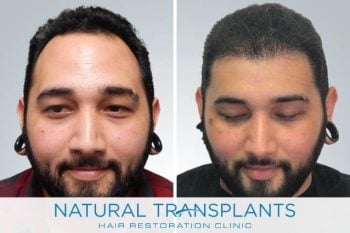
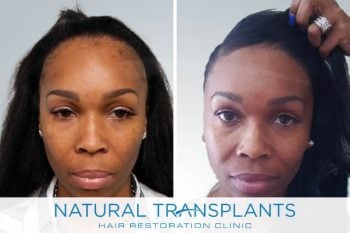
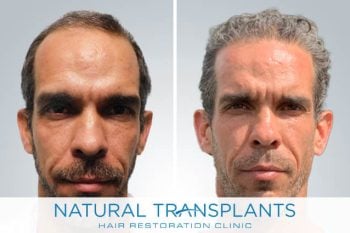
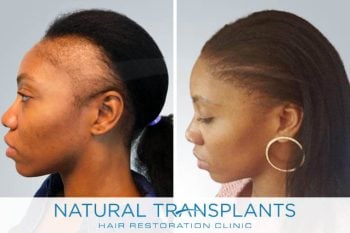
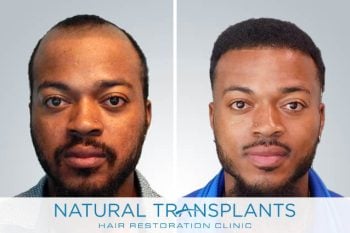
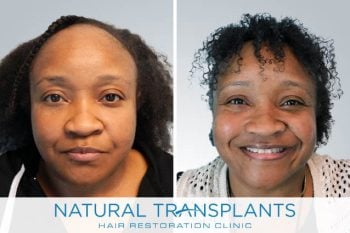
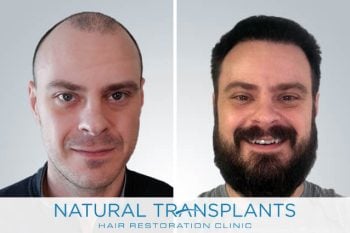
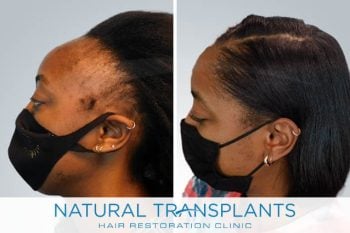
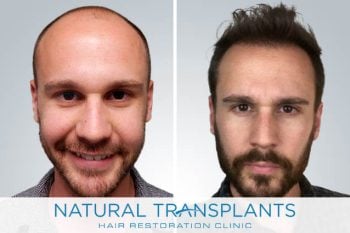
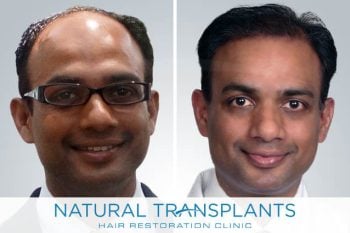
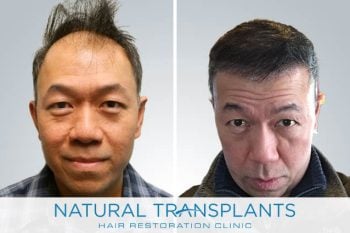
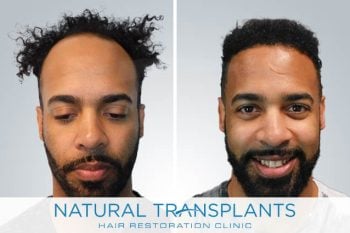
Hair loss is progressive, so your results must look natural for decades. A skilled surgeon will plan for future thinning by strategically placing grafts and preserving your donor area for potential additional procedures. However, since surgery doesn’t stop the loss of your existing native hair, a good plan requires more than just a transplant.
To protect your results, long-term planning must include preventative treatments like finasteride, minoxidil, or therapies. Without medical management, you risk losing the native hair behind your transplant over time, leaving an unnatural “island” of transplanted hair. A trustworthy surgeon combines surgical skill with preventative care to safeguard your investment.
This complication can happen with both major transplant techniques. Aggressive FUE (Follicular Unit Extraction) procedures, where grafts are removed too close together, can leave the back and sides of the scalp looking sparse or uneven. In FUT (Follicular Unit Transplantation), overharvesting typically means removing a strip that is too wide, which can cause excessive scalp tension and a stretched, highly visible linear scar. With either method, removing too much tissue can damage the tiny blood vessels that nourish hair follicles, impairing healing and limiting hair growth in the donor area.
At Natural Transplants, we prioritize donor area preservation by carefully planning graft extraction, using controlled techniques like HUE, and ensuring every step protects density and maintains long-term options for future procedures.