

Noticing more scalp showing through your hair or finding that your hair no longer looks as thick and full as it used to? Improving hair density starts with understanding why your hair looks thinner and which treatments or habits can help restore a fuller appearance.
Genetics, aging, hormonal changes, and certain types of hair loss can all influence how much hair grows across your scalp.
Although you cannot typically increase the number of hair follicles naturally present on your scalp, you may be able to improve hair density by supporting regrowth from existing follicles. The best approach depends on what is causing your hair to look thinner.
Is It Possible to Increase Hair Density?
While you cannot typically increase the number of hair follicles naturally present on your scalp, you may be able to improve overall hair density by supporting hair regrowth from existing follicles.
If your hair is becoming thinner due to shrinking hair follicles or increased shedding, treatments that address the underlying cause may help reduce hair loss, stimulate regrowth, and create a fuller appearance. The effectiveness of these approaches depends on the cause and extent of your hair loss.
However, some people naturally have lower hair density because they have fewer hair strands growing across their scalp. In these cases, there may be limited potential to increase the number of growing hairs. Preventative measures can reduce avoidable damage and traction-related hair loss, but they cannot reliably prevent genetically determined thinning.
What Causes Low Hair Density?
Low hair density can stem from naturally fewer strands, shrinking follicles, or increased shedding, each requiring a different approach. There are several factors that can contribute to low hair density or make your hair appear thinner than it used to.
- Genetics: Your genes can strongly influence your natural hair density, strand characteristics, and susceptibility to certain types of hair loss.
- DHT sensitivity: Dihydrotestosterone (DHT) can cause susceptible hair follicles to shrink over time, contributing to androgenetic alopecia, commonly known as pattern hair loss.
- Aging: With age, hair strands may become finer, and overall hair density may decrease.
- Hormonal changes: Pregnancy, menopause, thyroid disorders, and other hormonal changes can contribute to hair thinning or shedding.
- Stress and illness (Telogen Effluvium): Significant physical or psychological stress, major illness, surgery, or rapid weight loss can prematurely shock hair follicles into a resting phase, triggering a condition called telogen effluvium which is marked by diffuse, acute shedding.
Identifying the cause is an important first step because the most effective way to improve hair density depends on what is affecting your hair.
High vs. Low Hair Density: What’s the Difference?
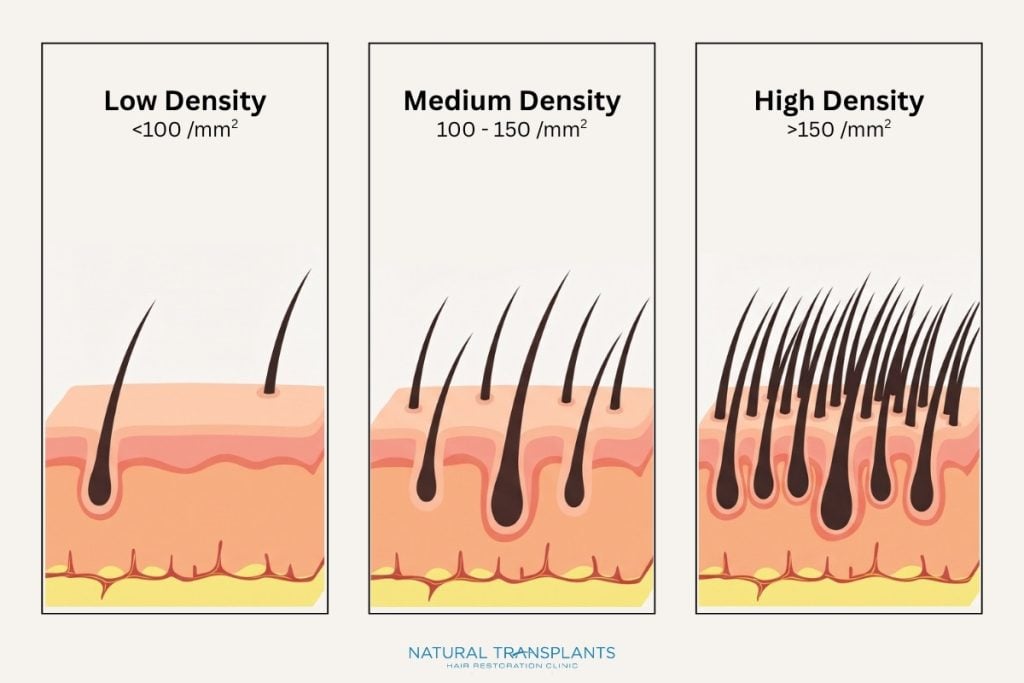
Hair density refers to the number of individual hair strands growing within a given area of the scalp. High hair density means more strands grow within that area, while low hair density means fewer strands are present.
Hair thickness, on the other hand, describes the diameter of individual strands. Someone can have fine hair with high density or thick strands with relatively low density.
Understanding the difference can help you determine why your hair looks or feels thinner and which strategies may be most appropriate.
How to Tell If You Have Low Hair Density
You may have naturally low hair density if your scalp has always been relatively visible through your hair. However, new or progressive thinning can indicate a change in hair growth.
Common signs include:
- A widening part or more visible scalp
- A receding hairline or thinning around the temples
- Reduced coverage at the crown
- A thinner-looking ponytail or less overall volume
- Persistent or noticeably increased shedding, or a visible change in hair density
A hair density chart or visual comparison may provide a general reference, but it cannot reliably diagnose hair loss. A dermatologist or hair restoration doctor can evaluate your scalp, hair growth patterns, and medical history to help determine whether your density is normal for you or has changed over time.
How to Increase Hair Density: 6 Strategies to Consider
Improving hair density often requires a combination of appropriate treatment, healthy habits, and hair care practices. The most effective options depend on the cause of thinning and whether your goal is to encourage regrowth, reduce shedding, or make existing hair look fuller.
1. Medical Treatments for Hair Loss
Medical treatments may help improve hair density when thinning is caused by a treatable form of hair loss.
- Minoxidil: Available as an over-the-counter topical solution/foam or as an off-label low-dose oral prescription. Minoxidil acts as a potassium channel opener and vasodilator, prolonging the anagen (growth) phase of follicles and reversing miniaturization. It requires several months to show measurable results, and consistent use is necessary to maintain benefits.
- Finasteride: Oral finasteride is a prescription medication used primarily to treat male pattern hair loss. It reduces DHT production and may help slow follicle miniaturization. It is not appropriate for everyone and requires a discussion of potential risks with a clinician.
- Other treatments: Depending on the diagnosis, a clinician may recommend other medications or therapies. Ketoconazole shampoo, for example, can help manage certain scalp conditions, but it should not be presented as a proven standalone treatment for increasing hair density.
Before starting treatment, consult a qualified healthcare professional to determine which options are appropriate for your hair loss pattern, medical history, and individual needs.
2. Maintain Scalp Care
A healthy scalp supports normal hair growth, while appropriate hair care can help prevent avoidable breakage and preserve the appearance of fuller hair.
Consider the following practices:
- Wash your hair regularly with a shampoo suited to your scalp and hair type.
- Address dandruff, irritation, or persistent scalp inflammation.
- Avoid excessive heat styling and harsh chemical treatments.
- Limit tight hairstyles that repeatedly pull on the hair.
- Handle wet hair gently to minimize breakage.
Clarifying shampoos can help remove product buildup, but they do not increase the number of hair follicles or directly stimulate new growth. Likewise, keeping your scalp clean is beneficial for scalp health but is not a standalone treatment for pattern hair loss.
3. Maintain a Balanced Diet
Healthy hair growth depends on adequate nutrition. Hair follicles require sufficient protein and other nutrients to support normal growth cycles.
Aim to eat a balanced diet that includes protein-rich foods, fruits, vegetables, whole grains, and sources of essential minerals and vitamins. Iron, zinc, and other nutrients play important roles in normal hair function, although supplements are unlikely to improve density when you already get enough of these nutrients.
Avoid unguided megadoses of over-the-counter hair supplements. In particular, taking high doses of biotin without a diagnosed deficiency offers no proven benefit for hair density and can critically skew routine blood lab results including cardiac troponin and thyroid hormone panels.
If you are experiencing unexplained or persistent hair thinning, a healthcare professional can assess whether nutritional deficiencies or other medical factors may be contributing.
4. Manage Stress and Overall Health
Significant physical or emotional stress can trigger temporary excessive shedding, sometimes several months after the triggering event. Consistent sleep, stress management, and adequate recovery can support overall health while the hair cycle normalizes.
Regular physical activity, relaxation techniques, and maintaining a consistent sleep schedule may help manage stress and promote overall well-being. If excessive shedding persists, consult a healthcare professional to identify potential underlying causes, such as nutritional deficiencies, hormonal changes, or other medical conditions.
5. Scalp Massages and Hair Oils
Scalp massages and oils are popular additions to hair care routines. Gentle massage may be relaxing, and certain oils can help condition hair or reduce friction-related breakage. However, strong clinical evidence that these practices meaningfully increase hair density is limited.
Rosemary oil is sometimes promoted as a natural alternative to minoxidil, but the available research is limited and does not establish that it is equally effective. Essential oils can also irritate the scalp if used improperly.
If you choose to use hair oils or massage your scalp, treat them as supportive hair care rather than a proven treatment for hair loss.
6. Use Hair-Friendly Styling Techniques
The right styling techniques can make hair appear fuller and create the illusion of greater density, even without increasing the number of hair follicles.
To improve the appearance of hair density, consider the following tips:
- Use lightweight volumizing products: Choose mousses, sprays, or other products designed to add body without weighing hair down.
- Choose a volume-enhancing haircut: The right cut can make fine or thinning hair appear thicker and fuller.
- Lift hair at the roots: Use a suitable blow-dry routine or root-lifting products to create additional volume.
- Consider cosmetic concealers: Hair fibers, scalp concealers, and similar products can help camouflage visible areas of the scalp.
While these techniques can improve the appearance of fullness, they do not increase actual hair density or treat the underlying causes of hair loss.
It’s also important to avoid styling habits that can contribute to hair breakage or thinning:
- Avoid tight hairstyles: Frequently wearing tight ponytails, high buns, braids, cornrows, or heavy hair extensions can place prolonged tension on hair follicles and contribute to traction alopecia, a form of hair loss caused by repeated pulling.
- Limit heat styling: Frequent use of flat irons, curling irons, and high-heat blow-dryers can damage the hair shaft, leading to breakage and making hair appear thinner. Use lower heat settings and a heat protectant when styling.
- Be cautious with chemical treatments: Repeated dyeing, bleaching, relaxing, or other chemical treatments can weaken hair strands and increase breakage, potentially reducing the appearance of fullness.
Adopting gentler styling habits can help preserve existing hair, minimize breakage, and maintain a fuller appearance over time.
